Mobile Access Trends

In the world of cybersecurity, ethical hacking proactively identifies security vulnerabilities before malicious actors (i.e., unethical hackers) can exploit them. By simulating real-world attacks, organisations can strengthen defences, protect sensitive data, and maintain public trust. In the physical security world, ethical hacking can transform cybersecurity of security systems from a reactive struggle into a strategic safeguard. We asked our Expert Panel Roundtable: What is the role of ethical hacking as it relates to physical security?

Next-generation (Next-Gen) technologies are products, services, or infrastructures that represent a significant leap forward rather than a small, incremental update. In the physical security industry, NextGen products are those that enable disruptive change, breakthrough performance, and a fundamental change that renders previous products obsolete. We asked our Expert Panel Roundtable: What is the next generation of physical security solutions, and how will they change the industry?

Emphasising proactive rather than reactive security shifts the focus from dealing with crises and damage control to prevention. Advantages of a proactive approach include cost efficiency, better business continuity, and fewer crises that draw attention away from strategic improvements. Staying ahead of threats is a core mission of the security department, and technology has evolved to enable security professionals to deliver on that mission better than ever. We asked our Expert Panel Roundtable: How are security systems transitioning from reactive to proactive, and what is the benefit?

Multiple technology trends are transforming the physical access control market. There is a fundamental shift away from physical cards and keys toward digital identities — mobile credentials, digital wallets, biometrics, and cloud-native access platforms. These next generation access solutions are radically reshaping how buildings operate, protect staff, and perform functionally. At the same time, AI and analytics solutions are being layered onto these physical access control systems to support predictive threat detection and behavioural insights. Access data itself is becoming an asset for sustainability, space optimisation, and smart building initiatives. Risk, impact operations and experience The annual HID Global Security and Identity Trends Report highlights these and other issues The annual HID Global Security and Identity Trends Report highlights these and other issues. The survey cites improving user convenience as a priority for nearly half of organisations, while 41% are focused on simplifying administration, and 28% struggle with system integration. These are not theoretical challenges, they are day‑to‑day friction points that add cost, increase risk, impact operations and experience, and, of course, must be addressed. HID Global’s commercial focus HID Global’s commercial focus is to help organisations digitise their access control — with mobile identities, biometrics, and cloud platforms — and then to use the data to deliver more value. “We are turning access control from an operational cost into a software-driven asset that improves efficiency, supports Environmental, Social, and Governance (ESG) goals and even creates new revenue opportunities,” says Steven Commander, HID Global’s Head of Consultant Relations. The impact of digital transformation Digital transformation is the method of moving access control from hardware and physical credentials Digital transformation is in the process of moving access control from hardware and physical credentials to a software-driven, integrated experience. The transformation strengthens security while also improving user convenience — transforming the “pavement to the desk” journey. HID enables this shift through mobile credentials, biometrics, cloud-native platforms, and solutions that allow third-party applications to run on door hardware. “This helps customers turn access data into operational and commercial outcomes, while also improving the overall user experience,” says Commander. Digital transformation in access control is not focused on chasing the latest trends. Rather, transformation is about turning software, data and integration into outcomes that matter to customers, says HID. “Security becomes stronger and more adaptive,” says Commander. “Operations become simpler and more cost‑effective. Experiences become seamless and consistent. Sustainability moves from ambition to action. And the financial case becomes clearer as efficiencies are banked and new value streams emerge.” The challenge of futureproofing with long lifecycles Given that physical security technologies will be in place for 15 to 20 years, it is important to plan for how systems can evolve over time. Considering how rapidly security threats, compliance standards, and user expectations change, 15 to 20 years is a long time. The decisions made at the beginning of a system’s lifecycle can either limit flexibility later (which will be costly) or enable long-term adaptability. Support for open standards such as Open Supervised Device Protocol (OSDP) is therefore important Choosing products and platforms that are open, interoperable, and designed for updates can enable future-proof projects. Support for open standards such as Open Supervised Device Protocol (OSDP) is therefore important. In addition, systems built on open controller platforms — such as Mercury — enable organisations to switch software providers or expand functionality without replacing core door hardware. Architectural openness is key to system lifecycles and maximising the return on investment (ROI) from a chosen solution. Digital credentials and mobile access Flexibility and upgradeability should also be top of mind when it comes to endpoints like access control readers. While RFID cards are still commonplace, there is a clear trend toward digital credentials and mobile access. Readers that support both allow organisations to transition at their own pace, without committing to a full system overhaul. A long system lifecycle does not mean technology should remain static. Security, particularly cybersecurity, demands more frequent updates. Technologies that support firmware upgrades in the field extend the value of a deployment while helping organisations keep pace with emerging threats. In that sense, lifecycle thinking is not just about longevity — it’s about maintaining resilience and readiness over time. Applying biometrics and mobile identities Biometrics is becoming mainstream as a credential alternative, strengthening security without adding friction Biometrics is becoming mainstream as a credential alternative, strengthening security without adding friction. Many organisations are now deploying biometrics to support fast, seamless access journeys, with adoption already around 39% in access control according to HID’s recent research. In addition, 80% of organisations surveyed expect to deploy mobile identities within the next five years. Full technology integration enables tap‑to‑access without opening an app; the user journey becomes faster, safer, and more convenient. “It is where the industry is headed and we are at the vanguard of this,” says Commander. Ongoing challenge of cybersecurity At HID Global, cybersecurity is embedded into everything, from corporate processes and development practices to the solutions they bring to market. “Our approach ensures that customers can strengthen their overall security posture, not only by deploying secure products but by benefitting from HID’s commitment to the highest industry standards,” says Commander. HID holds multiple globally recognised certifications, including ISO 27001, ISO 14298, SOC Type 2 and CSA STAR, which demonstrate their robust information security and cloud security practices. In addition, HID’s SEOS® secure chipset is independently SEAL-certified, providing one of the most advanced levels of protection available on the market today. “Ultimately, this means organisations are not just purchasing isolated secure products; they are implementing solutions developed and delivered within a comprehensive, cybersecure framework,” says Commander. “When deployed according to best practices, HID solutions enable customers to achieve the highest levels of resilience against evolving physical and cyber threats.” Developing green and sustainable solutions A huge amount of waste is generated from the manufacture of plastic RFID access cards Digital credentials align with the sustainable solutions that everyone wants. A huge amount of waste is generated from the manufacture of plastic RFID access cards. Over 550 million access cards are sold annually. This creates 2,700 tons of plastic waste and 11,400 tons of carbon, based on a PVC card weighing 5 grams. Therefore, digital credentials self-evidently reduce the reliance on plastic cards (helping reduce carbon emissions by up to 75% according to HID’s research), while leveraging access control system data supports energy optimisation by shutting down or reducing systems in unused spaces. Energy use and CO₂ emissions can be cut dramatically, showing how access systems can contribute to sustainability goals and green building certification. What is the latest in smart buildings? Smart buildings increasingly rely on mobile access control as the backbone for digital services. Real-time access data enables new services such as automated room bookings, HVAC control, lift/elevator calling, e-bike hiring, and so on. Smart buildings increasingly rely on mobile access control as the backbone for digital services The financial upside is clear; smart, digitally transformed buildings can deliver around 8% higher yields per square foot versus traditional office space. Operational savings accrue from reduced administration, the removal of card production and shipping, and lighter IT support. This creates a value cycle — better experiences drive adoption, adoption fuels monetisation, and monetisation funds further improvements. Achieving technology impact in the real world One standout project is One Bangkok – a $3.9 billion mixed used development in Thailand – which demonstrates the scale of what can be achieved when access control data is used for optimisation, particularly when it comes to monitoring facilities usage and occupier behaviours. By switching lights off or lowering the temperature in unused rooms, for example, the One Bangkok building demonstrates this potential with a 22% reduction in energy consumption, saving 17,000 MWh and 9,000 tons of CO₂ annually. Sustainability is a key factor in contributing to how properties are valued. And sustainability extends far beyond digital credentials having a lower environmental impact than plastic cards. Buildings with recognised sustainability certifications often command rental premiums of around 6%, and three‑quarters of security decision‑makers now consider environmental impact in their procurement assessments.
Latest Access control news

ONVIF®, whose open standards make IP-based physical security products interoperable worldwide, announces the Release Candidate for the ONVIF Media Signing Add-on, a standardised method for confirming the authenticity and integrity of surveillance video. Surveillance footage matters most when it is relied upon after an incident, in settings such as law enforcement casework, corporate and internal investigations, insurance claims, and legal proceedings. Yet as manipulated and AI-generated video becomes more convincing, the long-standing assumption that such footage is genuine is becoming harder to defend. The ONVIF Media Signing Add-on enables those who depend on surveillance footage to verify where the signed video originated and whether it has been unaltered since it was created. Integrity of surveillance video “Proving authenticity is central to trust in video. The Media Signing Add-on Release Candidate gives the security industry a standardised method to help counter manipulated video and defend authentic content,” said Leo Levit, Chairman, ONVIF Board of Directors. “Making it an open standard ensures transparency, builds trust and enables investigators, insurers and courts to verify video from different sources using consistent tools and workflow.” ONVIF will be speaking on video authenticity as part of the educational programming at GSX 2026, September 14-16 in Atlanta. Roberto Licari, ONVIF Ambassador, will present "Can Security Video Survive Generative AI?" on September 14 from 2:45-3:45 PM in Room B316. Signed video sequence The Media Signing Add-on gives network video devices, such as IP cameras and video encoders, a standardised method for cryptographically signing encoded video at the point of creation. The signing information links the video to the specific device that produced it and protects the integrity of the signed video sequence. A video player or verification tool that supports the Media Signing Specification can then confirm whether the signed video is valid and trace it back to its source, even after the video has been shared across different platforms and services. The add-on currently supports video; support for audio is planned for future versions. To claim conformance with the Media Signing Add-on, a product must also conform to an ONVIF profile. Combination of open code ONVIF has released the implementation of media signing as an open-source project, publishing the framework code for both signing and verification on the ONVIF GitHub. Opening the code to the developer community makes the ONVIF method transparent and easier to implement for camera vendors and client applications alike, while allowing anyone to examine how signing and verification work. That transparency in the technical implementation preserves trust in the authentication process and the integrity of the video itself. The combination of open code and easier implementation is expected to help the standard gain wider adoption across the security industry. ONVIF members can now access the specification and test tools for prototyping and testing in the ONVIF Member Portal. ONVIF expects to release the final specification at the end of 2026.

Nearly every enterprise believes its AI agents are properly scoped but only a third have actually made sure of it. New research from Cequence Security, the pioneer in application, API, and agentic AI protection, and Enterprise Management Associates (EMA) found that 94% of enterprise IT and security leaders are confident their AI agents do not have more access than they need, yet only 33% actually provision agents with least-privilege access. The remaining two-thirds run on broad standing permissions that are reviewed periodically, rarely reviewed, or never reviewed at all. The full report, Agents Without Guardrails: The Agentic AI Governance Gap in the Enterprise, is available for download now. Broad standing permissions The gap between confidence and practice is already showing up in production, not as a theoretical risk, but as incidents enterprises are living with right now. Among the organisations surveyed: 65% have experienced an AI agent take an action outside its intended scope, including 29% with measurable business impact such as data exposure, financial loss, operational disruption, or reputational damage. Another 36% caught a near-miss before it caused damage. Only 32% can detect and contain an out-of-scope agent action within minutes through automated means; 55% need hours and manual steps to respond. In approximately 4% of the organisations surveyed, the first sign of trouble came from a customer or outside partner, not an internal system. Customer-facing applications The findings point to one clear story. Governance has not kept pace with the speed of agentic AI deployment, and that gap is showing up at every stage of the agent lifecycle, from how agents are provisioned, to how their actions are authorised, to how they are decommissioned once a pilot ends. Other key findings from the report include: The scale of deployment makes the gap more urgent. 46% of organisations report they are already scaling agentic AI across multiple departments and production workflows, and 79% are running generative and agentic AI simultaneously. Further, more than 92% report an increase in AI and bot-driven traffic targeting customer-facing applications and APIs. That governance gap extends to how access is enforced the moment an agent acts. Only 34% of organisations evaluate an AI agent's authorisation at the moment it attempts a specific action. The majority rely on periodic policy reviews or standing permissions set once at provisioning and never revisited, meaning an agent's access can quietly outlive the task it was originally granted for, and keep working long after anyone signed off on it. Additionally, there’s an increasing risk in how enterprises manage agents that don't make it to production. 31% of agentic AI pilots have been paused indefinitely, discontinued, or abandoned. Many were real deployments with real system access and credentials that were never cleaned up. Every abandoned pilot with live credentials is an exposure nobody is actively watching. 14% of organisations allow AI agents to connect to outside tools and data sources via the Model Context Protocol (MCP) without restriction. Among the majority who do limit those connections to an approved list, fewer than half (49%) have a dedicated team actively maintaining and auditing that list on a regular basis. Well past experimentation Christopher M. Steffen, CISSP, CISA, VP of Research at EMA, said: “This research shows enterprises have moved well past experimentation with agentic AI right into production and governance has not kept pace with that shift. The gap isn’t a lack of awareness; most organisations have policies in place and express real confidence in them. The gap is between what’s written down and what’s enforced when an agent takes an action nobody approved. That disconnect shows up most clearly in how organisations authorise agent actions and monitor them once they’re live, and it’s the reason incidents are happening at a rate the industry hasn’t fully reckoned with.” Shreyans Mehta, Co-founder and CTO at Cequence, said: “The number that jumped out to me is the 92% being confident in their governance frameworks. Confidence like that is a trap; its exactly why organisations stop looking for problems, stop investing in monitoring, and let authorisation checks lapse until an incident forces the conversation. This is the exact blind spot Cequence is built to close, giving security teams real-time visibility into what AI agents are actually doing and enforcing authorisation at the moment an agent acts, not after the fact.” Join Christopher M. Steffen, Vice President of Research at EMA, and Randolph Barr, Chief Information Security Officer at Cequence, for the “Agents Without Guardrails” webinar.

Eviden, the Atos Group product brand in cybersecurity products, mission critical systems and vision AI, today announces that its Ipsotek Vision AI solution, has been named in Gartner® Emerging Tech: Vision AI Analytics Functionality Matrix, 2026. According to Gartner®, “Fast-evolving technologies and a fiercely competitive market are challenging video/image analytics vendors to deliver advanced turnkey solutions that are scalable and reliable. This functionality matrix enables product leaders to identify market gaps and opportunities and differentiate their offerings in their most profitable areas.” Real-world environments Dr. Boghos Boghossian, Vision AI’s CEO & CTO at Ipsotek, an Eviden Business, said: “We’re proud to be named in Gartner® Emerging Tech: Vision AI Analytics Functionality Matrix, 2026, reinforcing our focus on helping enterprises deploy Vision AI that drives measurable outcomes in complex, real-world environments.” Eviden’s Vision AI offering, Ipsotek VISuite, is designed to help organisations extract operational intelligence from video at scale, enabling improved safety, efficiency and situational awareness across a range of industries and environments. Today, Ipsotek VISuite technology supports organisations across 17 key industries in 44 countries and growing, processing more than 700,000 hours of video every day and helping safeguard over 2 million people daily, demonstrating the scale and real-world impact of its mission-critical computer vision solutions.

Allied Universal®, the world’s security and facility services company, has been named to Forbes list of America’s Best Employers by State 2026 in Maryland, Nevada, New Jersey and Washington. The recognition reflects the strength of the company’s workplace culture and the meaningful impact its people have in shaping it every day. “Being named to Forbes list of America’s Best Employers By State is an honour and a reflection of the extraordinary people who make Allied Universal what it is today,” said Steve Jones, global chairman and CEO of Allied Universal. Perceptions of workplace culture “Our team members bring professionalism, integrity and a clear sense of purpose to their work every day. We remain committed to investing in our people, promoting from within and helping them grow and achieve their career goals.” America’s Best Employers By State were selected based on an independent survey of more than 245,000 employees at companies with at least 500 people in the U.S. Employers were evaluated based on direct employee feedback, including their willingness to recommend their employer and their perceptions of workplace culture, compensation and benefits, leadership, flexibility, reputation, and opportunities for growth.
Access control applications

ZeroEyes, creators of the multi-analytics weapons detection and threat intelligence platform, announces that its proactive AI gun detection and intelligent situational awareness software has been renewed by Central Valley School District in Beaver County, Pennsylvania after a successful first year of deployment. Serving four schools across Beaver County, Pennsylvania, including a primary center, elementary school, middle school, and high school, the district supports approximately 2,200 students and 200 faculty and staff. ZeroEyes has been integrated across all facilities as part of the district’s commitment to maintaining a safe, secure, and welcoming learning environment. Welcoming learning environment “The safety of our students and staff will always be our top priority,” said Brian Dolph, Safety & Security Director for the Central Valley School District. “By implementing ZeroEyes technology, Central Valley School District is taking a proactive step to enhance campus security and provide real-time detection of potential firearm threats, helping ensure that our schools remain safe places for teaching, learning, and growth. ZeroEyes has been a valued partner, delivering continuous monitoring and an added level of assurance in our campus security efforts.” Central Valley School District’s deployment is part of a broader, layered approach to safety that includes closed-circuit cameras, a visitor management system, ALICE-trained staff, regular district-wide safety drills, and school resource officers in all buildings. The district also conducts coordinated active shooter drills each summer in partnership with Beaver County Emergency Services and works closely with local communities, including Monaca Borough and Central Township, to support campus safety efforts. Situational awareness software ZeroEyes’ AI gun detection and intelligent situational awareness software layers onto existing digital security cameras. If a gun is identified, images are instantly shared with the ZeroEyes Operations Center (ZOC), the industry’s only U.S.-based, fully in-house operations centre staffed 24/7/365 by specially trained U.S. military and law enforcement veterans. If the threat is determined to be valid, alerts and actionable intelligence — including visual description, gun type, and last known location — are dispatched to law enforcement and school officials, often in a matter of seconds from the moment a gun is detected. “Central Valley School District has taken a thoughtful and proactive approach to campus safety,” said Mike Lahiff, CEO and co-founder of ZeroEyes. “By continuing to invest in real-time intelligence and working closely with trusted partners, the district is strengthening its ability to respond quickly to potential threats while maintaining a safe and supportive learning environment.”

Security requirements for critical infrastructure are changing rapidly. Recent events, such as the discovery of a drone at Leipzig Airport, have once again demonstrated how quickly modern technologies can become a security challenge. This makes dialogue between industry, authorities and emergency services all the more important. Security Essen, which will take place at Messe Essen from 22 to 25 September 2026, is placing precisely this exchange at the heart of two key programme highlights: the European Drone Conference and the Emergency Services Forum. Unmanned aerial systems open up a wide range of potential applications – from inspecting critical infrastructure to supporting security and emergency services. Protection of critical infrastructure At the same time, they present new challenges for operators of sensitive facilities. The European Drone Conference on 23 and 24 September will therefore bring together experts from the security industry, public authorities, academia and politics to discuss current developments, the regulatory framework and effective protection strategies. The conference is organised by the Drone Expert Committee of the German Security Industry Association (BDSW), together with Security Essen and the Confederation of European Security Services (CoESS). Experts discuss drone deployment, detection and countermeasures Around 20 specialist presentations will examine drone technology from various perspectives – ranging from regulatory issues and the protection of critical infrastructure to detection and counter-drone systems. Managing new risks In his statement, Cornelius Toussaint, Vice-President of the BDSW and Chair of the Drone Expert Committee, will focus on security and drone technology in Germany. Marcus Schermann (DB Sicherheit GmbH) will discuss the protection of critical infrastructure, using multicopter operations as an example. Drone management, with a particular focus on detection and countermeasures, is the main theme addressed by the two speakers, Ralf Holstein and André Danner (German Business Protection GmbH). The programme is complemented by presentations on research and development, as well as international keynote speeches from the worlds of politics and the security industry. The central question is how to capitalise on the opportunities offered by the technology whilst effectively managing new risks. Public safety authorities Emergency Services Forum (Blaulichtforum) takes place for the first time In collaboration with Feuerwehr-Magazin (Fire & Rescue Magazine) and Rettungs-Magazin (Emergency Medical Services Magazine), the Emergency Services Forum 2026 will make its debut at Security Essen. On 22 September, the new forum will bring together public safety authorities and organisations (BOS), the security industry and public authorities, focusing on a key question: How are new threat scenarios and technologies changing security and emergency response? On stage, experts from the fire service, police, civil protection, the security industry and defence will discuss current challenges: What role will drones and autonomous systems play in future operations? Shared situational picture How well is Germany prepared for CBRNE incidents and hybrid threats? And how do control centres, communication technologies and networked systems ensure that a shared situational picture emerges in an emergency? The focus will also be on cooperation between civilian and military actors. Specialist conferences included in the trade fair admission ticket Both the European Drone Conference and the Emergency Services Forum will take place directly in Hall 5. Admission is already included in the Security Essen trade fair ticket. Tickets for Security Essen 2026 are available online. A day ticket costs €49. The trade fair is open from 9 am to 6 pm from Tuesday to Thursday and from 9 am to 4 pm on Friday.

Milestone Systems, a provider of open platform video management software (VMS), is helping Resorts World Las Vegas (RWLV) bring together security operations, investigations, gaming compliance, and operational intelligence through an open platform video ecosystem built on Milestone XProtect VMS. Located on the iconic Las Vegas Strip, Resorts World Las Vegas is one of the newest and most technologically advanced resorts in the United States. Opened in 2021, the $4.3 billion property spans 88 acres and includes multiple hotel brands, a large casino floor, entertainment venues, retail spaces, and dining experiences that collectively attract thousands of guests each day. Diverse set of technologies Managing safety, compliance, and operational efficiency at this scale requires highly reliable and flexible video technology capable of supporting thousands of cameras and multiple specialised applications. Milestone XProtect VMS serves as the backbone that connects approximately 5,800 cameras and multiple best-of-breed technologies. The open architecture enables Resorts World to integrate a diverse set of technologies that support gaming surveillance, fraud detection, forensic investigations, business intelligence, and operational analytics while allowing operators to work from a consistent interface. "We rely on the system every day to investigate fraud, theft, and any activity that could result in a loss. It gives us the visibility we need to quickly understand what happened and take action," said Lindsay Dever, CFE, Assistant Director of Fraud & Nightclub Surveillance, Resorts World Las Vegas. Supporting regulatory requirements The full security system integrates camera technologies from Axis Communications, Bosch, and Hanwha Vision, while BriefCam supports forensic video review, people counting, and heat mapping. Oosto provides facial recognition capabilities, Aeyesky supports card-counting and cheating detection, and AXIS Case Insight helps analyse foot traffic and customer behavior. “Large, dynamic environments like Resorts World Las Vegas require technology that can adapt to multiple operational needs without adding complexity,” said Tim Palmquist, VP Americas, Milestone Systems. “An open platform approach allows this Las Vegas casino resort to bring together best-of-breed technologies into a single ecosystem, enabling teams to improve investigations, support regulatory requirements, and generate operational insights that extend well beyond traditional security.” Time-sensitive investigations Resorts World Las Vegas is able to respond to incidents more quickly, conduct investigations more efficiently, and support law enforcement with speed and confidence. The impact is particularly evident during time-sensitive investigations. Looking ahead, the resort plans to expand its use of AI-driven capabilities, including enhanced people counting, behavioural analytics, and tools that can better track guest movement across the property. Future enhancements will also focus on streamlining operator workflows and creating a more proactive approach to investigations.

PPLD serves El Paso County across multiple branches — from busy urban libraries to new rural buildings. Its security program, built on systems dating back to the late 1980s, had to keep pace with a fast-growing footprint. “I don’t know that we would have been able to get to the point where we had everything we wanted deployed if we didn’t have tech like this,” said Michael Brantner, Chief Facilities & Security Officer, Pikes Peak Library District. Pikes Peak Library District (PPLD) is one of Colorado Springs’ most-used public institutions, serving the El Paso County community across multiple branches with 780 cameras and more than 150 doors under active monitoring. Their physical security program had been trying to keep pace. Legacy systems dating back to the late 1980s. Cameras and access control systems that didn’t talk to each other. A small team buried under too many alarms. The model was reactive, and it was overdue for a rethink. Legacy security technology The challenge - PPLD’s footprint was growing in a few ways, through new construction and the addition of more rural buildings under its umbrella – and Chief Facilities & Security Officer Michael Brantner needed more visibility across all of the buildings. Combining the systems in place to protect these locations, plus the new ones, required a new approach: bring decades of legacy security technology into a unified, modern operation that could scale alongside the district’s growth. PPLD wanted to centralise the management of the district’s security function, which led Michael to explore the creation of a new security operations center (SOC). “We had a lot of technology that didn’t talk to each other,” Michael said. “We wanted to be able to consolidate it into one place where we can manage what’s happening across our sites.” Consolidate disconnected systems When he started building PPLD’s SOC, the mandate was clear: bring decades of legacy security technology into a unified, modern operation that could scale alongside the district’s growth. But he also needed to consolidate disconnected systems, prove ROI to the C-suite, and staff and train a team that could actually move the program forward. At the time, PPLD’s setup was a patchwork: Cloud-based cameras and access control sitting next to legacy equipment, with no shared view across them Operators who were refreshing screens to see new alarms Panic alerts, door alarms, and intercom calls each requiring a different screen, a different workflow, and a different response Notifications were inconsistent Response times couldn’t be measured No centralised SOC to manage alarms cohesively Residents experiencing homelessness Most incoming alarms generated by PPLD’s ACS were false: held-open doors, cleaning crews, and after-hours trip alarms. But every single alarm still demanded a response from someone on the team, even if there was no safety issue. The complexity was real. PPLD’s branches serve a diverse community that includes families, students, and residents experiencing homelessness across locations with very different security profiles. Some deal with routine access events. Others face behavioural incidents, policy enforcement issues, and higher alarm volumes. Across all of them, public spaces had to stay public, and private staff areas had to stay private. Those boundaries need to be enforced, all day, every day. Access control systems The solution - As Michael stood up PPLD’s new SOC, HiveWatch stood out as a way to centralise the security program and allowed the growing team a single, active view of every incident across every system. The platform connected directly to PPLD’s existing cameras and access control systems. This meant operators were able to view door alarms, access events, video clips, panic alerts, and environmental sensors (including vape and smoke detection) in one single incident list in a web-based browser. Instead of refreshing screens and guessing at what they might have missed, operators could see every active incident and incoming alarm the moment it surfaced and respond from the same place. Killing redundant alerts Alarm deduplication cut volume on day one, killing redundant alerts before they hit an operator. Noisy doors became easy to spot and fix. When specific issues surfaced, like a flood of DHO alarms, for instance, the system helped the SOC adjust alarm timing. That adaptability, tuned to actual door and user behaviour without loosening security, kept the program compliant and cut the alarm load the SOC had to manage. Operators, along with field officers, made use of the mobile app, too. The team’s ability to acknowledge, investigate, and resolve incidents from anywhere in the building was a huge benefit. Security triage stopped being tied to a desk. Response became coordinated, in real time, across every location. Standard operating procedure But the shift went beyond operations. For the first time, PPLD’s leadership had detailed data on its security program: response times, alarm volumes, and incident trends. Michael could walk into a leadership meeting with numbers that proved the program’s value. He could spot which operators were hitting targets, which branches were generating outliers, and where more operator or officer training was needed. “We aren’t just operators staring at cameras anymore. HiveWatch lets us cut through the noise, focus on what matters, and actually expand what our team can do,” said Joe Vickous, SOC Supervisor, Pikes Peak Library District. Single active queue Every shift, PPLD’s operators manage a single active queue. Door forced at a branch. Vape detection in a restroom. Held-open back door after a cleaning crew shift change. An intercom call from a side entrance. All surfaced in one view without screen-refreshing or system-hopping. When an access control alert comes in, the response is immediate. The operator sees the alert with the connected camera feed in the same view, follows the built-in standard operating procedure (SOP), and, if warranted, dispatches the field officer with full context from within the platform. Audible alerts mean the SOC can run HiveWatch in a single tab without sacrificing a full monitor, freeing operators to handle more important work like footage pulls, door testing, and badge creation between incidents. Badge creation between incidents “HiveWatch makes the operators more flexible and makes them more versatile, as well,” Michael said. “They’re able to focus on something else and it will prompt them and say, hey, pay attention. We have to interact. They can check it out, dispatch somebody, and then go back to what they’re doing.” And when something crosses the public-private line, such as a patron drifting into a staff-only corridor, the platform surfaces it in real time. The operator sees it, the field officer responds, and the boundary holds. Public stays public. Private stays private. No guessing. No discovery after the fact. Incidents are caught early, handled according to protocol, and documented with a full record attached. “The biggest benefit for us is having the tool that sorts through the noise and focuses the operators on the notifications that are actually coming in that need attention,” Branter said. Standard operating procedure The results: Median time to acknowledge incidents of 21 seconds and median time to resolve of 28 seconds using HiveWatch. Scaled the SOC from 2 operators to 6 plus a manager, with the platform absorbing the workload increase. Extended the SOC beyond the control room with mobile triage and response for field officers and operators. Equipped leadership with real-time data on acknowledgement and response times, and alarm trends, turning a reactive program into a proactive, measurable one. Positioned the program to absorb 800 additional cameras and access points without proportional headcount growth.




Global Security Exchange (GSX) 2026 news
ONVIF®, whose open standards make IP-based physical security products interoperable worldwide, announces the Release Candidate for the ONVIF Media Signing Add-on, a standardised method for confirm...

HID, a pioneer in trusted identity solutions, announces new enhancements that help organisations fast-track their mobile access adoption as part of their broader digital transformation. Introduced ahe...
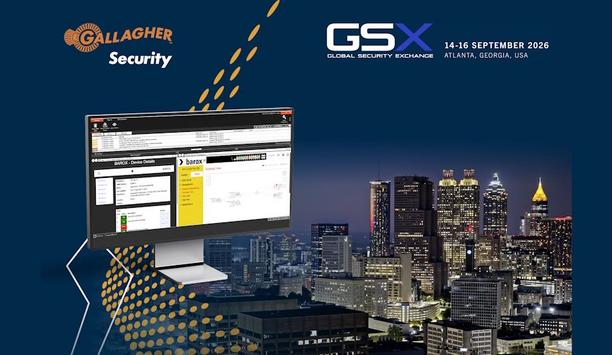
Showcasing the power of partnerships, barox and Gallagher will highlight their joint value proposition at GSX, booth #3433, 14-16 September, Georgia World Congress Center, Atlanta. Revealing seamless...

Securitas Technology, one of the world’s largest electronic security companies, will highlight the technologies, trends and innovations shaping the future of physical security at Global Security...

Nice and its HySecurity division will demonstrate the StrongArm® M30 crash-rated vehicle barrier at GSX (Global Security Exchange) 2026, September 14–16, at the Georgia World Congress Center...

At GSX 2026 (booth #2532), Genetec Inc., the global pioneer in enterprise physical security software, will showcase the latest enhancements to its portfolio, designed to help organisations modernise s...

ASIS International, the world’s largest association for security management professionals, has announced its programming lineup for Global Security Exchange (GSX) 2026 with in-person and digital...
Building on the success of Global Security Exchange (GSX) 2025, which welcomed participants from 95 countries, GSX 2026 is set to deliver another exceptional lineup of thought leadership and innovatio...

ASIS International, the world's largest association for security management professionals, is pleased to announce the opening of its Call for Proposals for the Global Security Exchange (GSX) ...

Security Essen 2026 news
Security requirements for critical infrastructure are changing rapidly. Recent events, such as the discovery of a drone at Leipzig Airport, have once again demonstrated how quickly modern technologies...

Gunnebo Safe Storage is returning to Security Essen, to showcase how secure storage, connected locking technologies and cyber resilience are converging to shape the future of physical security. On st...

The UK-based Keynetics will exhibit at Security Essen for the first time, showcasing SentriGuard, its smart key-management solution for controlled, auditable access to physical keys. On Keynetics&rsq...

At the trade fair Security Essen 2026, WAGNER Deutschland GmbH will present innovative solutions for technical fire protection from September 22 to 25. The focus of the company’s exhibition in H...

The security industry is positioning itself: months ahead of the event, Security Essen 2026 is already seeing strong demand from companies and a correspondingly high level of exhibitor participation....
