Mobile Access Trends

In the world of cybersecurity, ethical hacking proactively identifies security vulnerabilities before malicious actors (i.e., unethical hackers) can exploit them. By simulating real-world attacks, organisations can strengthen defences, protect sensitive data, and maintain public trust. In the physical security world, ethical hacking can transform cybersecurity of security systems from a reactive struggle into a strategic safeguard. We asked our Expert Panel Roundtable: What is the role of ethical hacking as it relates to physical security?

Next-generation (Next-Gen) technologies are products, services, or infrastructures that represent a significant leap forward rather than a small, incremental update. In the physical security industry, NextGen products are those that enable disruptive change, breakthrough performance, and a fundamental change that renders previous products obsolete. We asked our Expert Panel Roundtable: What is the next generation of physical security solutions, and how will they change the industry?

Emphasising proactive rather than reactive security shifts the focus from dealing with crises and damage control to prevention. Advantages of a proactive approach include cost efficiency, better business continuity, and fewer crises that draw attention away from strategic improvements. Staying ahead of threats is a core mission of the security department, and technology has evolved to enable security professionals to deliver on that mission better than ever. We asked our Expert Panel Roundtable: How are security systems transitioning from reactive to proactive, and what is the benefit?

Multiple technology trends are transforming the physical access control market. There is a fundamental shift away from physical cards and keys toward digital identities — mobile credentials, digital wallets, biometrics, and cloud-native access platforms. These next generation access solutions are radically reshaping how buildings operate, protect staff, and perform functionally. At the same time, AI and analytics solutions are being layered onto these physical access control systems to support predictive threat detection and behavioural insights. Access data itself is becoming an asset for sustainability, space optimisation, and smart building initiatives. Risk, impact operations and experience The annual HID Global Security and Identity Trends Report highlights these and other issues The annual HID Global Security and Identity Trends Report highlights these and other issues. The survey cites improving user convenience as a priority for nearly half of organisations, while 41% are focused on simplifying administration, and 28% struggle with system integration. These are not theoretical challenges, they are day‑to‑day friction points that add cost, increase risk, impact operations and experience, and, of course, must be addressed. HID Global’s commercial focus HID Global’s commercial focus is to help organisations digitise their access control — with mobile identities, biometrics, and cloud platforms — and then to use the data to deliver more value. “We are turning access control from an operational cost into a software-driven asset that improves efficiency, supports Environmental, Social, and Governance (ESG) goals and even creates new revenue opportunities,” says Steven Commander, HID Global’s Head of Consultant Relations. The impact of digital transformation Digital transformation is the method of moving access control from hardware and physical credentials Digital transformation is in the process of moving access control from hardware and physical credentials to a software-driven, integrated experience. The transformation strengthens security while also improving user convenience — transforming the “pavement to the desk” journey. HID enables this shift through mobile credentials, biometrics, cloud-native platforms, and solutions that allow third-party applications to run on door hardware. “This helps customers turn access data into operational and commercial outcomes, while also improving the overall user experience,” says Commander. Digital transformation in access control is not focused on chasing the latest trends. Rather, transformation is about turning software, data and integration into outcomes that matter to customers, says HID. “Security becomes stronger and more adaptive,” says Commander. “Operations become simpler and more cost‑effective. Experiences become seamless and consistent. Sustainability moves from ambition to action. And the financial case becomes clearer as efficiencies are banked and new value streams emerge.” The challenge of futureproofing with long lifecycles Given that physical security technologies will be in place for 15 to 20 years, it is important to plan for how systems can evolve over time. Considering how rapidly security threats, compliance standards, and user expectations change, 15 to 20 years is a long time. The decisions made at the beginning of a system’s lifecycle can either limit flexibility later (which will be costly) or enable long-term adaptability. Support for open standards such as Open Supervised Device Protocol (OSDP) is therefore important Choosing products and platforms that are open, interoperable, and designed for updates can enable future-proof projects. Support for open standards such as Open Supervised Device Protocol (OSDP) is therefore important. In addition, systems built on open controller platforms — such as Mercury — enable organisations to switch software providers or expand functionality without replacing core door hardware. Architectural openness is key to system lifecycles and maximising the return on investment (ROI) from a chosen solution. Digital credentials and mobile access Flexibility and upgradeability should also be top of mind when it comes to endpoints like access control readers. While RFID cards are still commonplace, there is a clear trend toward digital credentials and mobile access. Readers that support both allow organisations to transition at their own pace, without committing to a full system overhaul. A long system lifecycle does not mean technology should remain static. Security, particularly cybersecurity, demands more frequent updates. Technologies that support firmware upgrades in the field extend the value of a deployment while helping organisations keep pace with emerging threats. In that sense, lifecycle thinking is not just about longevity — it’s about maintaining resilience and readiness over time. Applying biometrics and mobile identities Biometrics is becoming mainstream as a credential alternative, strengthening security without adding friction Biometrics is becoming mainstream as a credential alternative, strengthening security without adding friction. Many organisations are now deploying biometrics to support fast, seamless access journeys, with adoption already around 39% in access control according to HID’s recent research. In addition, 80% of organisations surveyed expect to deploy mobile identities within the next five years. Full technology integration enables tap‑to‑access without opening an app; the user journey becomes faster, safer, and more convenient. “It is where the industry is headed and we are at the vanguard of this,” says Commander. Ongoing challenge of cybersecurity At HID Global, cybersecurity is embedded into everything, from corporate processes and development practices to the solutions they bring to market. “Our approach ensures that customers can strengthen their overall security posture, not only by deploying secure products but by benefitting from HID’s commitment to the highest industry standards,” says Commander. HID holds multiple globally recognised certifications, including ISO 27001, ISO 14298, SOC Type 2 and CSA STAR, which demonstrate their robust information security and cloud security practices. In addition, HID’s SEOS® secure chipset is independently SEAL-certified, providing one of the most advanced levels of protection available on the market today. “Ultimately, this means organisations are not just purchasing isolated secure products; they are implementing solutions developed and delivered within a comprehensive, cybersecure framework,” says Commander. “When deployed according to best practices, HID solutions enable customers to achieve the highest levels of resilience against evolving physical and cyber threats.” Developing green and sustainable solutions A huge amount of waste is generated from the manufacture of plastic RFID access cards Digital credentials align with the sustainable solutions that everyone wants. A huge amount of waste is generated from the manufacture of plastic RFID access cards. Over 550 million access cards are sold annually. This creates 2,700 tons of plastic waste and 11,400 tons of carbon, based on a PVC card weighing 5 grams. Therefore, digital credentials self-evidently reduce the reliance on plastic cards (helping reduce carbon emissions by up to 75% according to HID’s research), while leveraging access control system data supports energy optimisation by shutting down or reducing systems in unused spaces. Energy use and CO₂ emissions can be cut dramatically, showing how access systems can contribute to sustainability goals and green building certification. What is the latest in smart buildings? Smart buildings increasingly rely on mobile access control as the backbone for digital services. Real-time access data enables new services such as automated room bookings, HVAC control, lift/elevator calling, e-bike hiring, and so on. Smart buildings increasingly rely on mobile access control as the backbone for digital services The financial upside is clear; smart, digitally transformed buildings can deliver around 8% higher yields per square foot versus traditional office space. Operational savings accrue from reduced administration, the removal of card production and shipping, and lighter IT support. This creates a value cycle — better experiences drive adoption, adoption fuels monetisation, and monetisation funds further improvements. Achieving technology impact in the real world One standout project is One Bangkok – a $3.9 billion mixed used development in Thailand – which demonstrates the scale of what can be achieved when access control data is used for optimisation, particularly when it comes to monitoring facilities usage and occupier behaviours. By switching lights off or lowering the temperature in unused rooms, for example, the One Bangkok building demonstrates this potential with a 22% reduction in energy consumption, saving 17,000 MWh and 9,000 tons of CO₂ annually. Sustainability is a key factor in contributing to how properties are valued. And sustainability extends far beyond digital credentials having a lower environmental impact than plastic cards. Buildings with recognised sustainability certifications often command rental premiums of around 6%, and three‑quarters of security decision‑makers now consider environmental impact in their procurement assessments.
Latest Access control news

Brivo, the AI innovator and pioneer in cloud-native physical security, announces the Schlage® XE360™ Series with RealSync™ lock is available within the Brivo Security Suite, delivering continuous, 24/7 Wi-Fi connectivity across all commercial doors at up to 70% lower cost per door than traditional hardwired systems. Historically, bringing electronic access control to secondary or interior openings—which account for approximately 75% of doors in a typical facility—has been cost-prohibitive due to extensive cabling, external power supplies, door controllers, and labour. Traditional hardwired systems Unlike conventional wireless locks that rely on periodic, scheduled "check-ins" or proprietary gateways, the Schlage® XE360™ Series with RealSync™ maintains a continuous cloud connection using existing building Wi-Fi infrastructure. Remote commands and access updates execute in less than 10 seconds. Benefits of Brivo - Schlage® XE360™ Series with RealSync™ integration include: True 24/7 Persistent Connectivity: Delivers instant remote lock and unlock execution, on-demand audit logs, and immediate door event alerts (such as forced or propped doors) without waiting for interval syncs. Streamlined Infrastructure: Connects directly over existing Wi-Fi networks, eliminating the need for dedicated control panels, proprietary wireless gateways, or expensive wiring runs. Up to 70% Cost Savings Per Door: Reduces upfront capital costs and installation complexity, making full-facility access control for every door economically viable. FleX Module™ Architecture: Easily upgrade existing doors from offline to real-time online locks by replacing the internal module rather than the entire lockset. Industry-Pioneering Battery Performance: Full year of battery life on standard AA batteries while remaining continuously connected to the network. Unified Security Operations: Centralises management of perimeter hardwired openings, interior wireless doors, video intelligence, and visitor management within a single Brivo Security Suite interface. Critical interior openings “For decades, security managers have had to compromise on which doors to secure because traditional hardwired access control simply didn't scale across an entire facility,” said Steve Van Till, Founder and President of Brivo. “The Schlage® XE360™ Series with RealSync™ integrated with the Brivo Security Suite eliminates the cost and infrastructure, making real-time visibility and policy enforcement achievable for every single door opening.” The integration empowers security integrators to approach facility security holistically, transitioning clients away from securing only primary entrances toward securing all critical interior openings—such as IT closets, administrative offices, and utility spaces. Major operational advancement Mike Ridgeway, Business Development Manager for Action Security Group Inc., an Alberta, Canada-based security integrator serving commercial and institutional organisations across Western Canada through its Accesio division, calls the Brivo-Schlage® XE360™ integration “a major operational advancement for both integrators and facility managers.” Adds Ridgeway, “The Schlage® XE360™ Series with RealSync™ gives us a new way to extend enterprise access control to more openings without the infrastructure and complexity traditionally required. For Action Security Group and our customers, it means faster deployment, greater flexibility, and a scalable path to bring more of the facility into the Brivo ecosystem with real-time visibility and control.” Available now, the Brivo integration with Schlage® XE360™ Series with RealSync™ will be exhibited along with other Brivo Security Suite products and features at the GSX show in Atlanta Sept. 14-16. Attendees are invited to stop by the Brivo booth 3525 to see a demonstration and meet with a Brivo expert.

Amthal has partnered with Brivo, expanding its integrated security portfolio with an AI-powered, cloud-native physical security platform designed to support organisations adopting more connected approaches to estate management. The Brivo Security Suite brings together access control, video intelligence, visitor management, and intrusion detection in a single environment, enabling organisations to manage multiple security functions in real time through a centralised platform. Individual operational requirements The addition complements Amthal’s existing security technologies and strengthens its ability to deliver integrated security solutions tailored to individual operational requirements. By bringing systems together through a top-layer single-site application, organisations can gain greater visibility while simplifying day-to-day administration. “Amthal has the right experience and expertise to maximize the value of cloud-native security technology for its customers,” said Rishi Lodhia, Managing Director EMEA at Brivo. “From initial design through installation to maintenance and monitoring, Amthal understands how to align the Brivo solution with the unique needs of each customer to provide a scalable, future-proof solution that delivers value from day one.” Public sector environments Brivo joins a portfolio of security technologies offered by Amthal across commercial, residential and public sector environments, broadening the range of integrated security solutions available. Brivo’s platform incorporates AI to help security teams identify events, monitor activity, and gain operational insight across multiple sites. It provides flexibility in how systems are procured, supporting both capital expenditure and subscription-based operational expenditure models to align with different organisational and financial requirements. Jamie Allam, CEO of Amthal Group Companies, concluded: “Adding Brivo broadens the range of technologies available to our customers and strengthens our ability to deliver integrated security. Alongside its technical capabilities, the platform offers flexibility in how organisations choose to position and procure their security systems, making it a valuable addition for our customers to benefit. We’re pleased to be working with Brivo and look forward to supporting future projects together.”

Allied Universal®, the world’s pioneer security and facility services provider, announces that Paul E. Masto has been appointed vice president of business development for Allied Universal Enhanced Protection Services, a business unit of Allied Universal. Masto brings 25 years of experience with the United States Secret Service, where he served on both the Presidential Protective Division and the Vice Presidential Protective Division during the Ronald Reagan and George H.W. Bush administrations. Throughout his career, he developed and implemented layered security systems for Presidential and Vice Presidential Candidates and he led protective details for visiting foreign heads of state. Customised security strategies "As demand for specialised security solutions continues to grow, we’re investing in leaders who bring exceptional expertise and credibility," said Glen Kucera, president of Allied Universal Enhanced Protection Services. "Paul’s experience and client-focused approach will help us continue to expand our Enhanced Protection Services business while delivering the customised security strategies our clients expect.” Masto served as the Assistant Special Agent in Charge of the U.S. Secret Service’s Las Vegas Field Office, where he oversaw the protective operations and criminal investigations. Under his leadership, the office ranked first among all Secret Service Field Offices in asset forfeitures and seizures. Customised security assessments He also served on the Secret Service’s elite Counter Assault Team and is a graduate of the United States Park Police Horseback Riding Academy. He worked as the co-site supervisor for the Utah Olympic Park during the 2002 Winter Olympics, overseeing the deployment of approximately 750 federal agents and National Guard Troops. Throughout his career, he was responsible for hundreds of federal and state arrests while serving in the New York, Washington D.C., Baltimore and Las Vegas field offices. In addition to his government service, Masto previously founded and led Universal Security Specialists, a global security consulting firm specialising in customised security assessments and enterprise-wide vulnerability evaluations and operational analysis for high-net-worth individuals. Evolving security challenges "I'm excited to join Allied Universal and use my training, expertise and worldwide network of colleagues to help grow the Enhanced Protection Services business," Masto said. "Throughout my career, I’ve built strong relationships and developed a deep understanding of protective intelligence, risk assessment and client-focused security planning. I look forward to bringing those experiences to Allied Universal and helping our clients address today’s evolving security challenges.” Masto earned bachelor’s degrees in English and psychology from Syracuse University in Syracuse, N.Y.

InnoTrans, taking place at Messe Berlin from the 22nd–25th of September, is the world's pioneer trade fair for transport technology, bringing together the key players shaping railway technology, infrastructure, public transport, and tunnel construction. At this year’s show, Zenitel will showcase its latest Unified Critical Communication solutions for increasingly connected transport networks. 2026 is particularly significant for Zenitel, marking 125 years since the company's founding in 1901. Over more than a century, Zenitel has evolved into a trusted provider of wayside and rolling stock audio solutions, with its wide range of intercoms and its flexible PAVA systems supporting thousands of stations and billions of passengers worldwide. InnoTrans provides a fitting platform to celebrate that milestone alongside its partners and customers, while looking ahead to the future of transportation communication. Critical communication systems “Transport networks are becoming increasingly connected, and that brings both opportunities and new responsibilities for those designing and operating critical communication systems,” says Henry Rawlins, Vice President Product Management at Zenitel. “At InnoTrans, we’re looking forward to showing how our latest solutions combine reliable communication with the flexibility, scalability and cybersecurity needed for modern transportation infrastructure.” Cybersecurity is becoming a vital consideration for systems responsible for safety-critical communication. Zenitel's team will deep dive into the evolving challenges around cybersecurity and how its audio and voice alarm systems are engineered to withstand modern cyber threats, while simplifying deployment and helping operators protect essential infrastructure as networks become more interconnected. Visitors can explore how security can be incorporated into the design of communication systems rather than treated as an afterthought. Future of critical communications At the heart of the Zenitel stand will be VAIA, the all-in-one Public Address and Voice Alarm amplifier built specifically for the demands of the transportation industry. Drawing on years of engineering expertise and feedback from integrators and operators worldwide, VAIA brings compact, cost-effective PAVA audio, without compromising the reliability and quality, transport networks depend on. Attendees can expect live demonstrations, technical deep-dives, and the opportunity to speak directly with Zenitel’s specialists about the topics presented, general best practices, and the challenges they face. Just as importantly, visitors are invited to share their own experiences, challenges and perspectives, creating an open discussion around the future of critical communications. On the stand: Koen Claerbout (Chief Executive Officer & President), Matt Maher (Executive Vice President), Henry Rawlins (Vice President Product Management), Hanne Eriksen (Senior Vice President), Paul Langridge (Business Development Manager), and Nik Manson (Technical Account Manager).
Access control applications

Bournemouth and Poole College, the largest provider of further education and apprenticeships in the Dorset area, has installed Hochiki's ESP addressable fire detection range across its four-storey site, protecting a diverse mix of teaching environments including IT suites, kitchens, workshops and engineering bays. The installation was specified and delivered by SFA Fire and Security, working closely with the college to design a system capable of handling the varied fire risks found across further education provision. Subjects such as catering, automotive maintenance, construction and engineering carry a higher risk of nuisance alarms from dust and fumes, while IT and digital media spaces rely heavily on electrical equipment. A tailored approach was needed to protect the site without interrupting learning. Protecting valuable teaching time ESP's common mounting base allowed SFA's installers to work through the site using a single standard base across most devices, reducing the range of parts held on site and helping installation stay on schedule despite the complexity of the building. In kitchens and workshops, LPCB and VdS approved heat sensors were used to distinguish genuine fire risk from cooking activity and dust, reducing false alarms and protecting valuable teaching time. ESP's textual identifier gives staff the exact location of an activated device, supporting fast and accurate evacuation decisions in a large site with high footfall. Wall-mounted VADs, certified to EN 54-23, added audio and visual alerts throughout the college, ensuring alarms reach staff and students regardless of location or impairment. Where cabling access was limited by drop beams, wireless technology was integrated onto the ESP loop, avoiding extensive drilling and preserving the building's original structure. Successful projects together Naomi Fell, Projects Director at SFA Fire and Security, said: "This project presented numerous challenges due to the complexity of each room and storey within the college. Our extensive experience with Hochiki's products, combined with the consistently positive feedback from our end-users, made Hochiki the clear choice for this project. We met the college's stringent deadlines with minimal disruption to teaching and learning." Ryan Baulcomb, Regional Sales Manager at Hochiki, added: "Hochiki and SFA have a strong, long-term partnership, built on years of successful projects together. This installation shows what that partnership can deliver on a genuinely complex site. We're proud that our products continue to give installers and end-users the reliability and support they expect." Bournemouth and Poole College now benefit from a fire detection system tailored to the specific demands of each corridor, room and storey across the site, with the flexibility to adapt as the college continues to grow.

In a move to modernise campus operations and create a smoother experience for students and staff, Peru’s National Agrarian University has deployed a comprehensive Hikvision smart campus solution. From streamlined access to safer transportation, the university is building a safer, connected and efficient campus environment. Universidad Nacional Agraria La Molina (National Agrarian University) is one of Peru's most respected academic institutions. Its 102-hectare campus operates more like a small city than a traditional university, serving eight faculties, around 8,000 students, and about 600 teachers every day. Campus bus operations As campus activity continued to grow, the university wanted a more modern and efficient way to manage daily operations. Previously, visitor and vehicle access relied heavily on manual checks and handwritten records. The university also wanted better visibility over campus bus operations and more effective support for security teams patrolling the large campus area. Their goals included: Streamlining pedestrian and vehicle access Equipping patrol teams with mobile tools to enable them to respond to incidents faster Enhancing safety and visibility across campus bus operations Centralising management through a single unified platform To achieve these, the university worked with system integrator Consorcio Valtar Security y Serinfortel to deploy a unified Hikvision smart campus solution. Anti-tailgating functions To improve pedestrian access, the university installed 18 Hikvision Pro Swing Barriers (DS-K3B530X) and 28 Face Recognition Terminals (DS-K5671-ZV) at the main and side entrances. The solution helps students and staff move through gates quickly while improving entry management. The facial recognition terminals support recognition speeds of less than 0.2 seconds per user and accuracy rates above 99%. Anti-tailgating functions, which prevent people slipping in behind others, helps ensure only authorised individuals can enter. LED indicators, meanwhile, provide visual indicators guide people through the turnstiles in order to avoid bottlenecks. To further streamline visitor handling, the university deployed a Visitor Terminal (DS-K5032-D) together with an Enrolments Station (DS-K1F600U-D6E-F) at the main entrance. The dual-screen visitor terminal supports paperless registration, helping security staff process guests more efficiently while reducing manual paperwork. At the same time, the enrolment station simplifies face enrolment and user management through an easy-to-use touch-screen interface. Anti-hitting protection mechanisms For vehicle access, Hikvision deployed 6 ANPR Cameras (DS-TCG406-E(S)) together with 6 Barrier Gates (DS-TMG520-H/B) at two campus entrances. The system automatically recognises license plates and manages vehicle access in real time, helping reduce waiting times and improve traffic flow. Staff vehicles can be pre-registered through the university’s app, allowing smoother entry during peak hours. Adjustable barrier speeds and multiple anti-hitting protection mechanisms also help improve operational safety. To further improve the driver experience, LED Screens (DS-TVL224-4-5Y) display welcome messages and vehicle information in real time. Because of the campus’s large size, motorcycle patrol teams play an important role in maintaining daily operations and responding quickly across different areas. To support these teams, the university has deployed 10 Hikvision Ultra Series Body Cameras (DS-MH2311) together with 2 Dock Stations (DS-MDS001). Several features make this solution particularly suitable for mobile patrol work: Clear 2 MP video recording with a wide 129° horizontal field of view Up to 8 hours of recording with a removable 3,300 mAh battery Wireless connectivity for improved communication Real-time positioning support through GPS Centralised charging, storage, and evidence upload through dock stations Professional campus operations The cameras are mainly used during routine motorcycle patrols and when responding to incidents on campus. Recorded footage helps clearly document security procedures and provides reliable records of how situations were handled, supporting transparent and professional campus operations. The university has also upgraded safety across its fleet of 11 campus buses with Hikvision onboard solutions. Each bus is equipped with: Mobile Dome Cameras (DS-2XM6726G1-IM/ND) and Mobile Network Cameras (DS-2XM6522G1-ID): These provide real-time HD video coverage inside and outside the buses, helping operators monitor passenger boarding, alighting, and road conditions clearly. DSM Camera (AE-VC1B1I-ISF(RJ45)): This improves driving safety by detecting critical safety indicators such as fatigue, distractions, and smoking. When potential risks are identified, alerts are immediately issued to the driver, helping encourage safer driving practices during daily routes. Touch Monitor (AE-MW1203): Drivers can view live camera feeds through the monitor. The display automatically switches to relevant views when doors open or when reversing, helping drivers monitor passenger movement and blind spots more effectively. Alarm Button (DS-1530HMI(AE)(O-NEU)): It allows drivers to immediately notify the control center for rapid assistance in emergency situations. Mobile NVR (AE-MN5043(1T/SSD)(RJ45)(O-STD)): This records and stores video while also supporting GPS positioning, geofencing, and route monitoring through Google Maps integration. Campus bus management Every solution, from access control and patrol operations to campus bus management, is centrally managed through HikCentral Professional. From this single platform, the university can: Monitor access events in real time Manage user permissions and visitor records Track campus buses through GIS-based maps Receive centralised alarms and event notifications Coordinate faster responses across campus According to the university, the solution has significantly improved operational visibility and coordination across the campus. “With Hikvision’s smart campus solution, we now have a much more efficient and connected way to manage daily campus operations,” says Joseph Jimy Ordóñez Blanco, General Coordinator of the University’s Security Unit. “From access management to transportation safety, the platform gives our teams better visibility, faster response capabilities, and greater confidence in maintaining a safe environment for students and staff.”

ZeroEyes, creators of the multi-analytics weapons detection and threat intelligence platform, announces that its proactive AI gun detection and intelligent situational awareness software has been renewed by Central Valley School District in Beaver County, Pennsylvania after a successful first year of deployment. Serving four schools across Beaver County, Pennsylvania, including a primary center, elementary school, middle school, and high school, the district supports approximately 2,200 students and 200 faculty and staff. ZeroEyes has been integrated across all facilities as part of the district’s commitment to maintaining a safe, secure, and welcoming learning environment. Welcoming learning environment “The safety of our students and staff will always be our top priority,” said Brian Dolph, Safety & Security Director for the Central Valley School District. “By implementing ZeroEyes technology, Central Valley School District is taking a proactive step to enhance campus security and provide real-time detection of potential firearm threats, helping ensure that our schools remain safe places for teaching, learning, and growth. ZeroEyes has been a valued partner, delivering continuous monitoring and an added level of assurance in our campus security efforts.” Central Valley School District’s deployment is part of a broader, layered approach to safety that includes closed-circuit cameras, a visitor management system, ALICE-trained staff, regular district-wide safety drills, and school resource officers in all buildings. The district also conducts coordinated active shooter drills each summer in partnership with Beaver County Emergency Services and works closely with local communities, including Monaca Borough and Central Township, to support campus safety efforts. Situational awareness software ZeroEyes’ AI gun detection and intelligent situational awareness software layers onto existing digital security cameras. If a gun is identified, images are instantly shared with the ZeroEyes Operations Center (ZOC), the industry’s only U.S.-based, fully in-house operations centre staffed 24/7/365 by specially trained U.S. military and law enforcement veterans. If the threat is determined to be valid, alerts and actionable intelligence — including visual description, gun type, and last known location — are dispatched to law enforcement and school officials, often in a matter of seconds from the moment a gun is detected. “Central Valley School District has taken a thoughtful and proactive approach to campus safety,” said Mike Lahiff, CEO and co-founder of ZeroEyes. “By continuing to invest in real-time intelligence and working closely with trusted partners, the district is strengthening its ability to respond quickly to potential threats while maintaining a safe and supportive learning environment.”

Security requirements for critical infrastructure are changing rapidly. Recent events, such as the discovery of a drone at Leipzig Airport, have once again demonstrated how quickly modern technologies can become a security challenge. This makes dialogue between industry, authorities and emergency services all the more important. Security Essen, which will take place at Messe Essen from 22 to 25 September 2026, is placing precisely this exchange at the heart of two key programme highlights: the European Drone Conference and the Emergency Services Forum. Unmanned aerial systems open up a wide range of potential applications – from inspecting critical infrastructure to supporting security and emergency services. Protection of critical infrastructure At the same time, they present new challenges for operators of sensitive facilities. The European Drone Conference on 23 and 24 September will therefore bring together experts from the security industry, public authorities, academia and politics to discuss current developments, the regulatory framework and effective protection strategies. The conference is organised by the Drone Expert Committee of the German Security Industry Association (BDSW), together with Security Essen and the Confederation of European Security Services (CoESS). Experts discuss drone deployment, detection and countermeasures Around 20 specialist presentations will examine drone technology from various perspectives – ranging from regulatory issues and the protection of critical infrastructure to detection and counter-drone systems. Managing new risks In his statement, Cornelius Toussaint, Vice-President of the BDSW and Chair of the Drone Expert Committee, will focus on security and drone technology in Germany. Marcus Schermann (DB Sicherheit GmbH) will discuss the protection of critical infrastructure, using multicopter operations as an example. Drone management, with a particular focus on detection and countermeasures, is the main theme addressed by the two speakers, Ralf Holstein and André Danner (German Business Protection GmbH). The programme is complemented by presentations on research and development, as well as international keynote speeches from the worlds of politics and the security industry. The central question is how to capitalise on the opportunities offered by the technology whilst effectively managing new risks. Public safety authorities Emergency Services Forum (Blaulichtforum) takes place for the first time In collaboration with Feuerwehr-Magazin (Fire & Rescue Magazine) and Rettungs-Magazin (Emergency Medical Services Magazine), the Emergency Services Forum 2026 will make its debut at Security Essen. On 22 September, the new forum will bring together public safety authorities and organisations (BOS), the security industry and public authorities, focusing on a key question: How are new threat scenarios and technologies changing security and emergency response? On stage, experts from the fire service, police, civil protection, the security industry and defence will discuss current challenges: What role will drones and autonomous systems play in future operations? Shared situational picture How well is Germany prepared for CBRNE incidents and hybrid threats? And how do control centres, communication technologies and networked systems ensure that a shared situational picture emerges in an emergency? The focus will also be on cooperation between civilian and military actors. Specialist conferences included in the trade fair admission ticket Both the European Drone Conference and the Emergency Services Forum will take place directly in Hall 5. Admission is already included in the Security Essen trade fair ticket. Tickets for Security Essen 2026 are available online. A day ticket costs €49. The trade fair is open from 9 am to 6 pm from Tuesday to Thursday and from 9 am to 4 pm on Friday.



Global Security Exchange (GSX) 2026 news

ONVIF®, whose open standards make IP-based physical security products interoperable worldwide, announces the Release Candidate for the ONVIF Media Signing Add-on, a standardised method for confirm...

HID, a pioneer in trusted identity solutions, announces new enhancements that help organisations fast-track their mobile access adoption as part of their broader digital transformation. Introduced ahe...
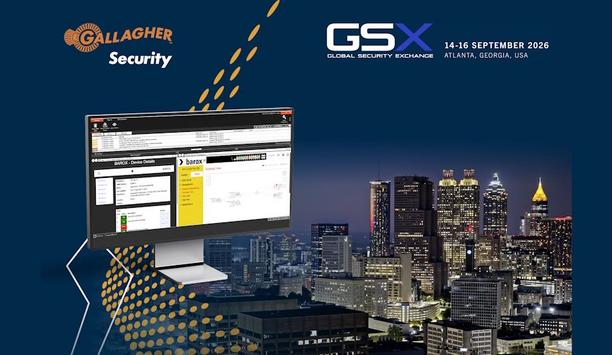
Showcasing the power of partnerships, barox and Gallagher will highlight their joint value proposition at GSX, booth #3433, 14-16 September, Georgia World Congress Center, Atlanta. Revealing seamless...

Securitas Technology, one of the world’s largest electronic security companies, will highlight the technologies, trends and innovations shaping the future of physical security at Global Security...

Nice and its HySecurity division will demonstrate the StrongArm® M30 crash-rated vehicle barrier at GSX (Global Security Exchange) 2026, September 14–16, at the Georgia World Congress Center...

At GSX 2026 (booth #2532), Genetec Inc., the global pioneer in enterprise physical security software, will showcase the latest enhancements to its portfolio, designed to help organisations modernise s...

ASIS International, the world’s largest association for security management professionals, has announced its programming lineup for Global Security Exchange (GSX) 2026 with in-person and digital...
Building on the success of Global Security Exchange (GSX) 2025, which welcomed participants from 95 countries, GSX 2026 is set to deliver another exceptional lineup of thought leadership and innovatio...

ASIS International, the world's largest association for security management professionals, is pleased to announce the opening of its Call for Proposals for the Global Security Exchange (GSX) ...

Security Essen 2026 news
Security requirements for critical infrastructure are changing rapidly. Recent events, such as the discovery of a drone at Leipzig Airport, have once again demonstrated how quickly modern technologies...

Gunnebo Safe Storage is returning to Security Essen, to showcase how secure storage, connected locking technologies and cyber resilience are converging to shape the future of physical security. On st...

The UK-based Keynetics will exhibit at Security Essen for the first time, showcasing SentriGuard, its smart key-management solution for controlled, auditable access to physical keys. On Keynetics&rsq...

At the trade fair Security Essen 2026, WAGNER Deutschland GmbH will present innovative solutions for technical fire protection from September 22 to 25. The focus of the company’s exhibition in H...

The security industry is positioning itself: months ahead of the event, Security Essen 2026 is already seeing strong demand from companies and a correspondingly high level of exhibitor participation....
